Custom Pergola Builders in Austin & Central Texas
A pergola adds architectural elegance while creating defined outdoor space. From simple garden structures to retractable canopy systems, we design and build pergolas that enhance your landscape and provide the right amount of shade for your needs.
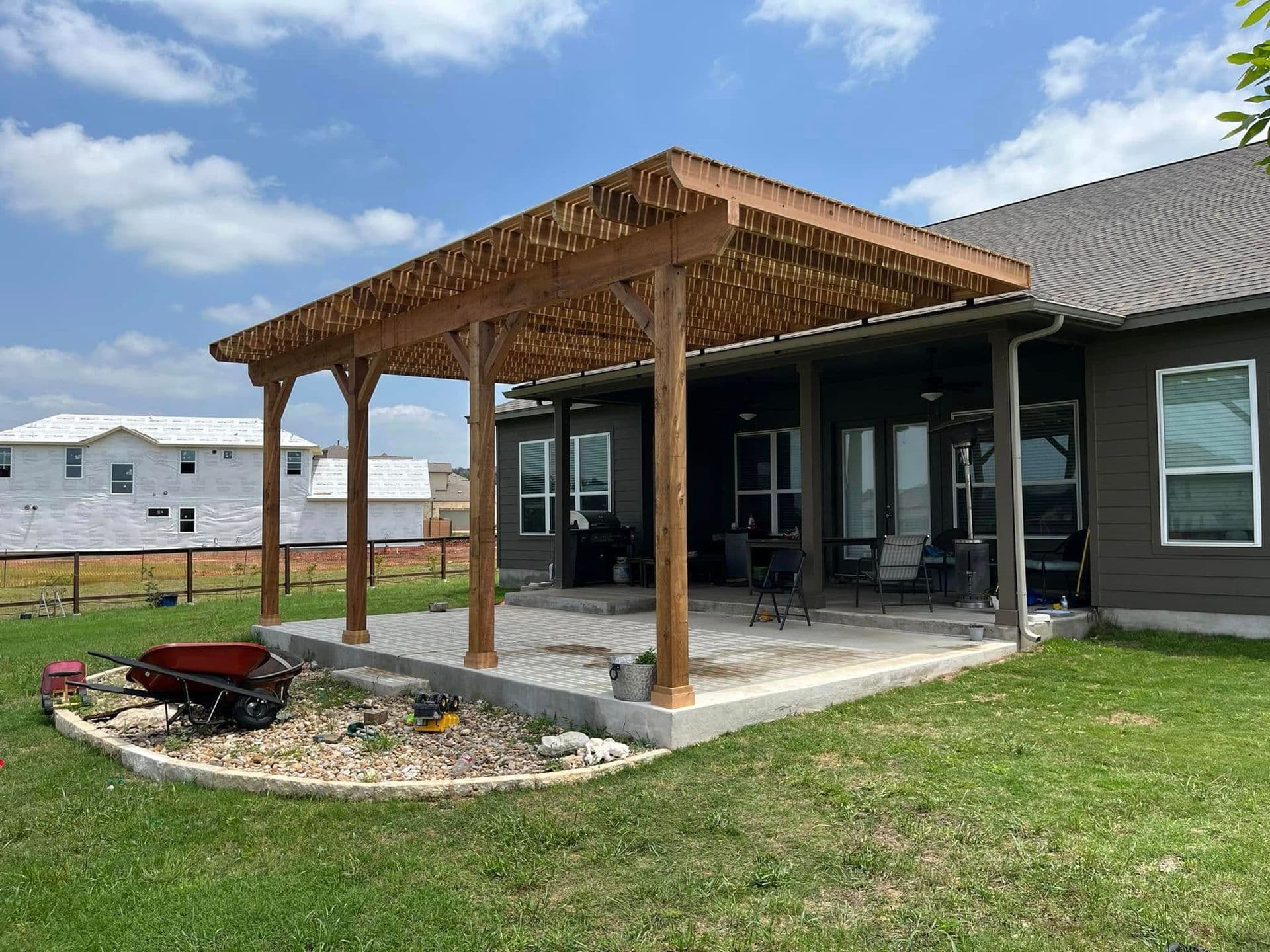
From Our Team on Pergolas
Clients often ask if a pergola provides "real" shade. Here's the honest answer: a traditional pergola with spaced rafters provides 25-50% shade - enough to take the edge off but not full protection. If you want more coverage, we can space rafters tighter or add a canopy system. The right design depends on your priorities: aesthetics, shade, or flexibility. I love helping homeowners find that balance.
Why It Matters
Pergolas define outdoor rooms without enclosing them. They're perfect for creating an outdoor dining area, framing a view, or adding vertical interest to a flat yard. The open design allows climbing plants like wisteria or bougainvillea to create natural beauty.
Architectural Impact
A well-designed pergola elevates your entire landscape. It frames views, creates vertical interest, and adds sophistication that flat patios can't match.
Flexible Shade Options
Start with an open pergola and add shade later - retractable canopies or shade sails. Your needs may change; a pergola adapts.
Perfect for Plants
Climbing vines like wisteria, jasmine, or bougainvillea thrive on pergola structures. Create a natural, living shade canopy that blooms seasonally.
Defines Outdoor Rooms
A pergola creates a "ceiling" for your outdoor space without walls. It signals where the living area is, organizing your backyard naturally.
Attached or Freestanding
We build pergolas attached to your home, freestanding over patios, or spanning between structures. Whatever your site requires.
LED Integration
We can build in lighting tracks for string lights or LED strips. Evening ambiance is easy when the infrastructure is designed in.
Our Process
Design Consultation
We discuss placement, size, style, and shade goals. Attached or freestanding? Open rafters or canopy system? We'll help you decide.
1-2 hours
Custom Design
Detailed plans showing dimensions, materials, and how the pergola integrates with your landscape. For attached pergolas, we plan structural connection and flashing.
1 week
Permits (if needed)
Attached pergolas and larger freestanding structures require permits. We handle the paperwork.
1-3 weeks
Construction
Foundation, posts, beams, and rafters by our experienced crew. Electrical for lighting if included.
1-2 weeks
Finishing
Stain, paint, or natural finish. Lighting installation. Canopy system if ordered. Walkthrough and warranty.
Final days
Frequently Asked Questions
Pergolas by City
We build pergolas across the Austin metro and Central Texas.
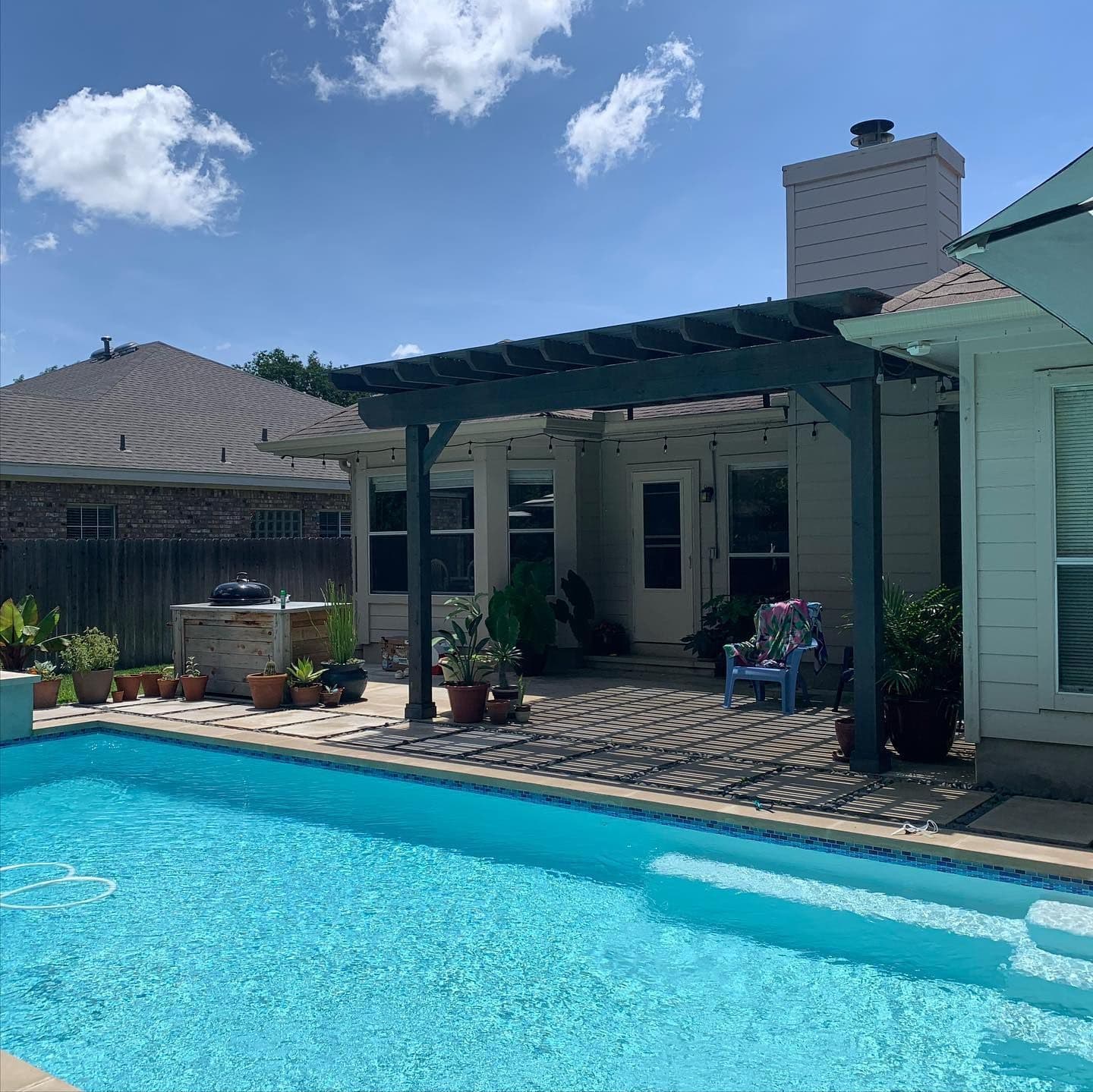
Pergola materials compared
Cedar is the choice most Austin homeowners land on. Western red cedar runs $45 to $65 per square foot installed, resists rot and insects on its own, and lasts 20 to 25 years with a stain every two to three years. Pressure-treated pine runs $30 to $45 per square foot, lasts 15 to 20 years, and is the better pick if you want to paint the pergola to match your trim.
Aluminum pergolas never need stain, will not rot, and suit modern houses with clean lines. Composite and wrapped posts give a wood look with less upkeep. Both trade some of the warmth of real wood for lower maintenance, and we price them to your design rather than from a flat rate.
In Central Texas, UV is the deciding factor. Stain breaks down faster here than in cooler climates, and bare pine checks and twists in a few summers. If you will not keep up with a stain schedule, cedar or a factory-finished metal holds its looks longer.
Attached or freestanding?
Attach the pergola to the house when it covers a patio right outside the back door. It uses the wall as one line of support, so it needs fewer posts and footings, which is why our entry project is a 10x12 attached pergola at $8,000 to $12,000.
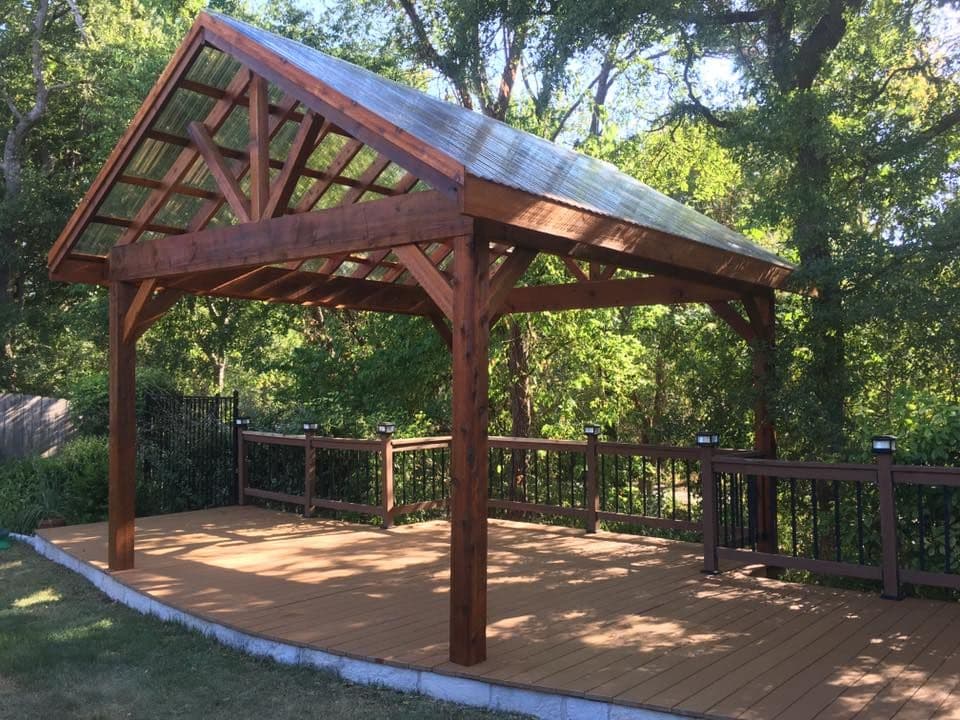
Go freestanding when the pergola covers a spot away from the house, like a pool deck, a fire pit, or an outdoor kitchen, or when the house wall is brick or stone that is hard to fasten into. It needs four or more posts and footings, and a 12x14 cedar freestanding pergola runs $14,000 to $22,000.
Shade percentage and add-ons
An open pergola gives roughly 25 to 50 percent shade. Tighter rafter spacing gets you to about 60 to 70 percent, and a retractable canopy reaches 90 percent or more. Pick the target first, then design the rafters around it. If you plan to eat dinner under it in July, aim for 60 percent or more.
Shade cloth stretched over the top is the lowest cost upgrade and can come down in winter. Clear or tinted polycarbonate panels over the rafters keep rain off while letting light through, but they trap more heat than cloth, so they work best with a fan. Ceiling fans need a solid mounting point and a damp-rated box. Lighting runs from simple string lights on hooks to LED strips hidden in the beams.
Plan add-ons before the build, even if you buy them later. Mounting points for a canopy, a beam sized for a fan, and conduit for lights cost little during framing and a lot after.
Wind, footings, and why pergolas wobble
A pergola wobbles when its posts are too thin, its footings too shallow, or its corners have no bracing. Open structures catch less wind than roofed ones, but a pergola with a canopy or panels on top acts more like a sail, and a spring storm in Central Texas can push hard on it.
Footings have to match the ground. East of I-35, expansive clay swells and shrinks with the seasons, so piers need depth to get below the moving layer. West of it, limestone often sits a foot or two down and has to be drilled. Post bases should hold the wood off the concrete so it can dry, and knee braces or moment connections at the top keep the frame square.
Pergola or patio cover?
Build a pergola when you want filtered light, a lighter look, and a smaller budget, and you mostly use the space in the morning or evening. Build a solid patio cover when you want full shade at 3 pm in August and a dry place to sit in the rain. A pergola with a retractable canopy sits in between.
Permits differ too. In Cedar Park and Georgetown, arbors and pergolas need a permit, and Round Rock lists $125 for a pergola permit or $300 with utilities. A solid patio cover is usually a structural permit with roofing and drainage in the review. Outside city limits in unincorporated Williamson County, neither needs a county building permit, though floodplain rules still apply. For a large dining area, our 14x20 cedar pergola runs $22,000 to $35,000.