Patio Cover Builders in Austin & Central Texas
A covered patio isn't just shade - it's an entirely new room for your home. After building hundreds of patio covers across Austin, Georgetown, and the Hill Country, we've learned exactly how to design structures that handle Texas heat, connect properly to your home, and actually get used 12 months a year.
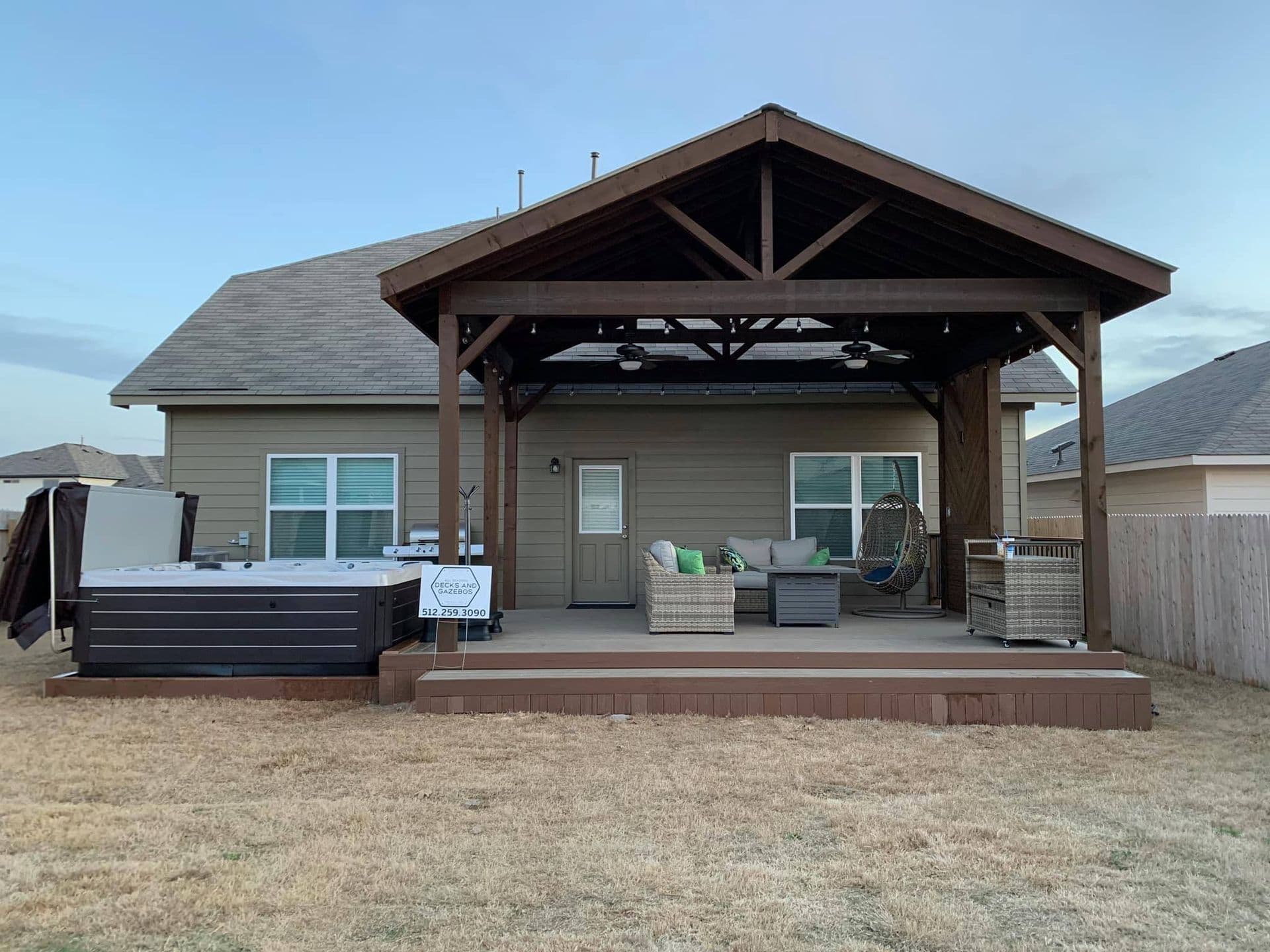
From Our Team on Patio Covers
The biggest mistake homeowners make is treating a patio cover like a simple project. It's not. It's a structural addition attached to your house, and if the engineering is wrong, you get water intrusion, foundation stress, or a roof that sags over time. We've torn out plenty of "handyman specials" where the flashing failed or the load calculations were wrong. When we attach a structure to your home, we do it right - proper engineering, correct flashing, and the permits to prove it's done to code. Dad taught me that attention to detail, and it's why our patio covers still look perfect 20 years later.
Why It Matters
In Texas, an uncovered south- or west-facing patio is unusable 6 months of the year. It's simply too hot. A properly designed patio cover can reduce temperatures underneath by 20-30 degrees and cut your home cooling costs by blocking direct sun on windows and doors. It transforms dead space into living space.
Reduce Cooling Costs
A patio cover blocking afternoon sun on windows and doors can noticeably reduce your AC load. We have had customers report 15-20% drops in summer electric bills.
Usable Year-Round
With proper design, your covered patio becomes a three-season room - or four seasons with added features. Rain, shine, or Texas heat, you'll use this space.
Outdoor Kitchen Ready
We coordinate gas lines, electrical, and plumbing during construction. Want a built-in grill, refrigerator, or pizza oven? We plan the infrastructure from day one.
Engineered for Your Home
Proper attachment requires structural engineering specific to your home. We handle the calculations, permits, and inspections - protecting your home and your investment.
Premium Material Options
From budget-friendly aluminum to beautiful cedar beams to insulated roof panels, we offer materials at every price point. And we'll tell you honestly which makes sense for your situation.
Adds Real Value
Quality outdoor living space is a top priority for Texas homebuyers. A well-designed patio cover returns 50-80% of its cost at resale - and delivers enjoyment every day until then.
Our Process
Design Consultation
We assess how the cover connects to your home, discuss your vision for the space, and identify any electrical, gas, or plumbing needs. We also check sun angles to maximize shade where you need it most.
1-2 hours
Engineering & Design
Our designers create detailed plans showing exactly what your patio cover will look like. We handle structural engineering to ensure proper loads and safe attachment to your home.
1-2 weeks
Permits & HOA
We submit for permits and HOA approval. Attached structures require both in most Central Texas communities. We know the process and the people.
2-4 weeks
Construction
Foundation work, structural framing, roofing, and finishing by our experienced crew. If you're adding an outdoor kitchen, we coordinate all trades for a seamless result.
3-5 weeks
Final Details & Warranty
Ceiling fans, lighting, gas line connections - we complete every detail. Final walkthrough, maintenance guidance, and your 1-year workmanship guarantee plus manufacturer material warranties.
Final week
Frequently Asked Questions
Covered Patios by City
We build covered patios across the Austin metro and Central Texas.
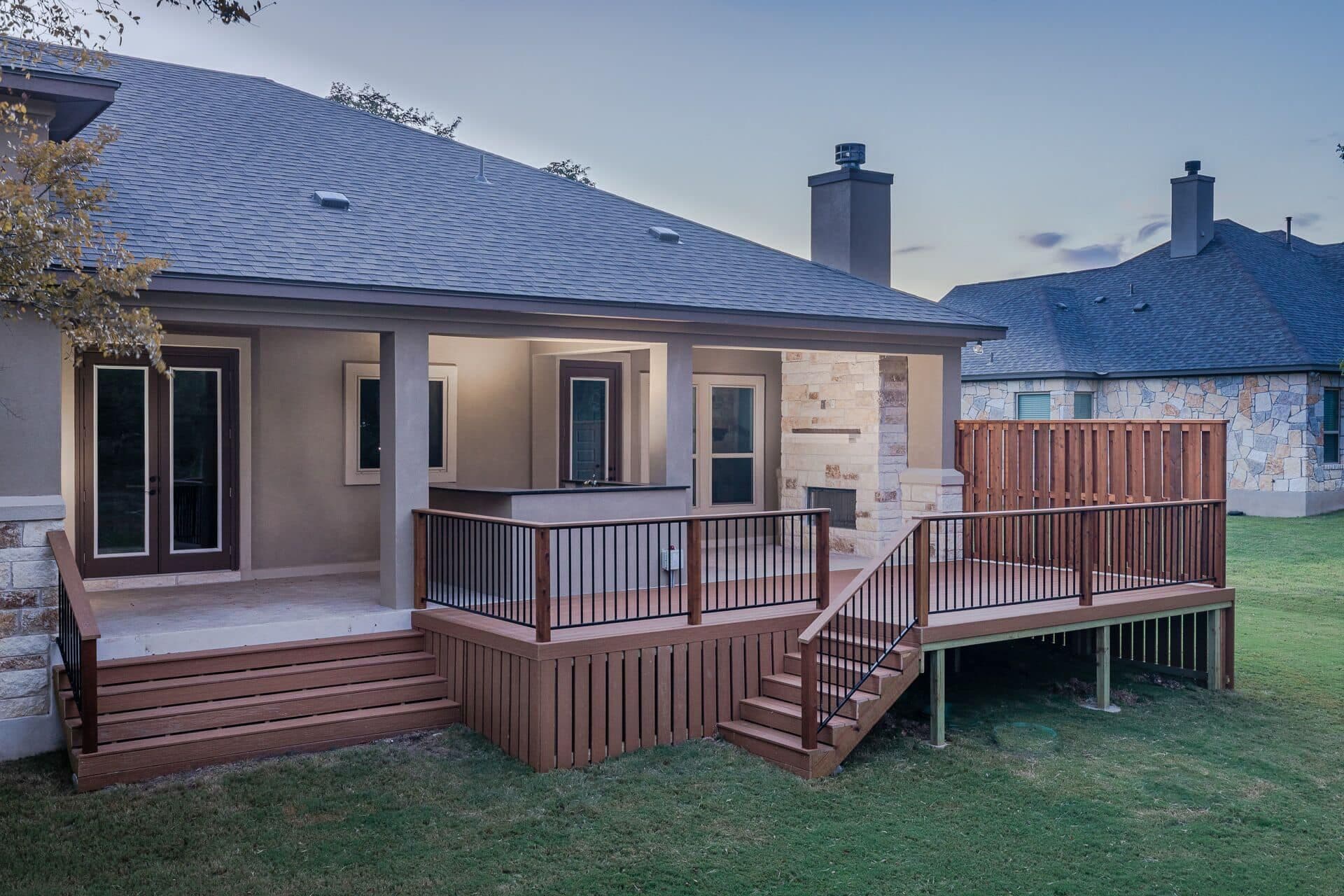
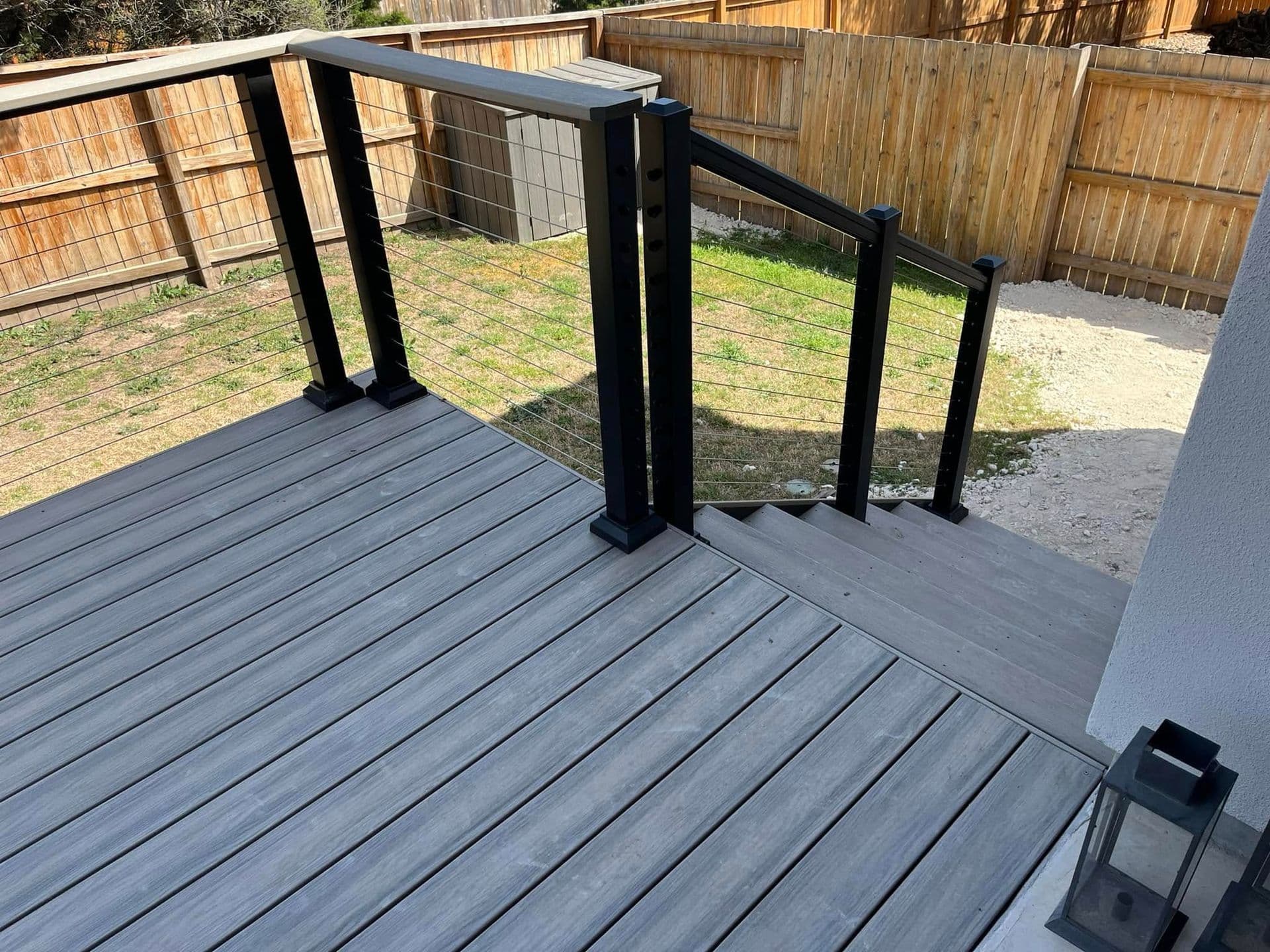
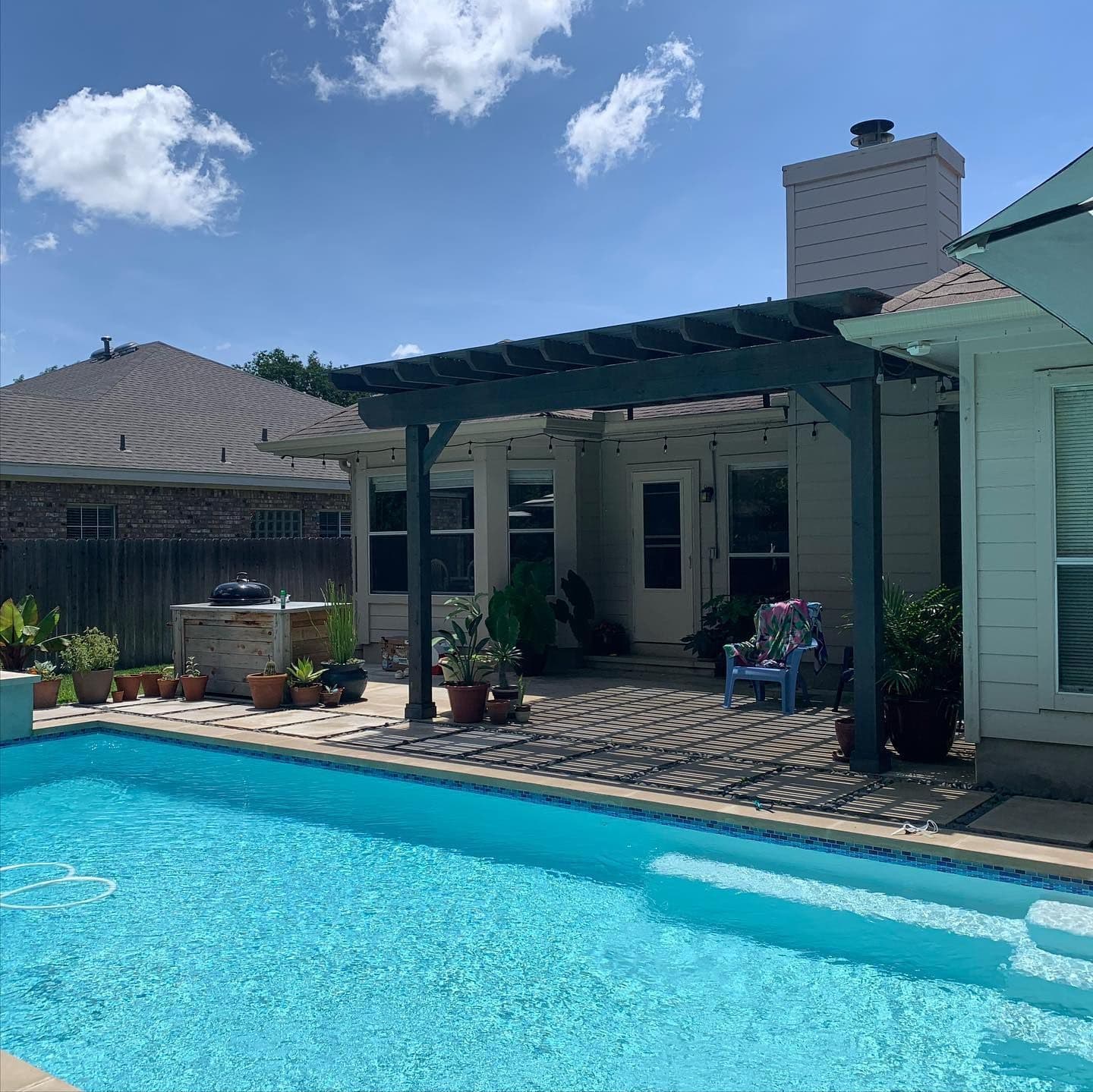
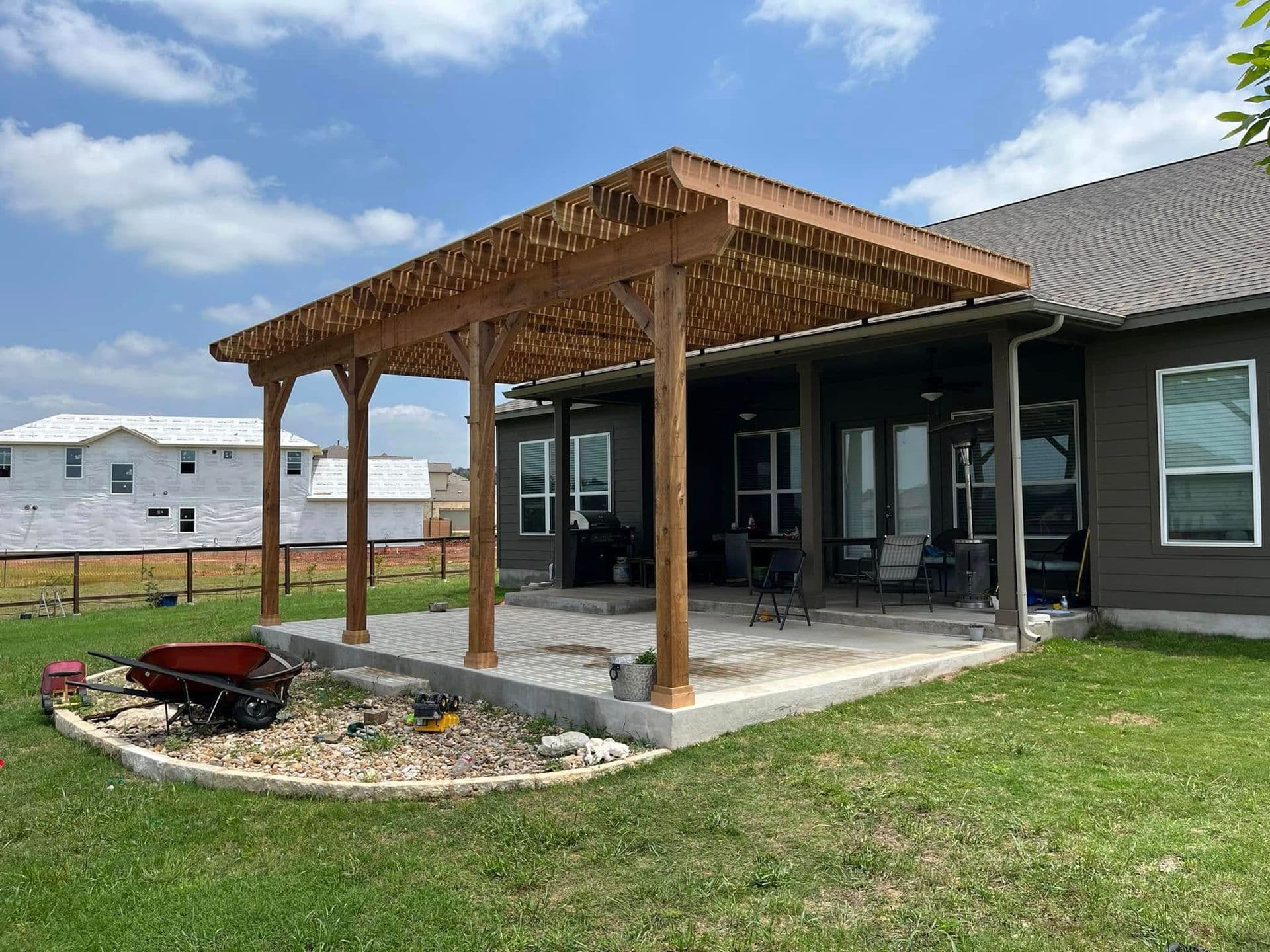
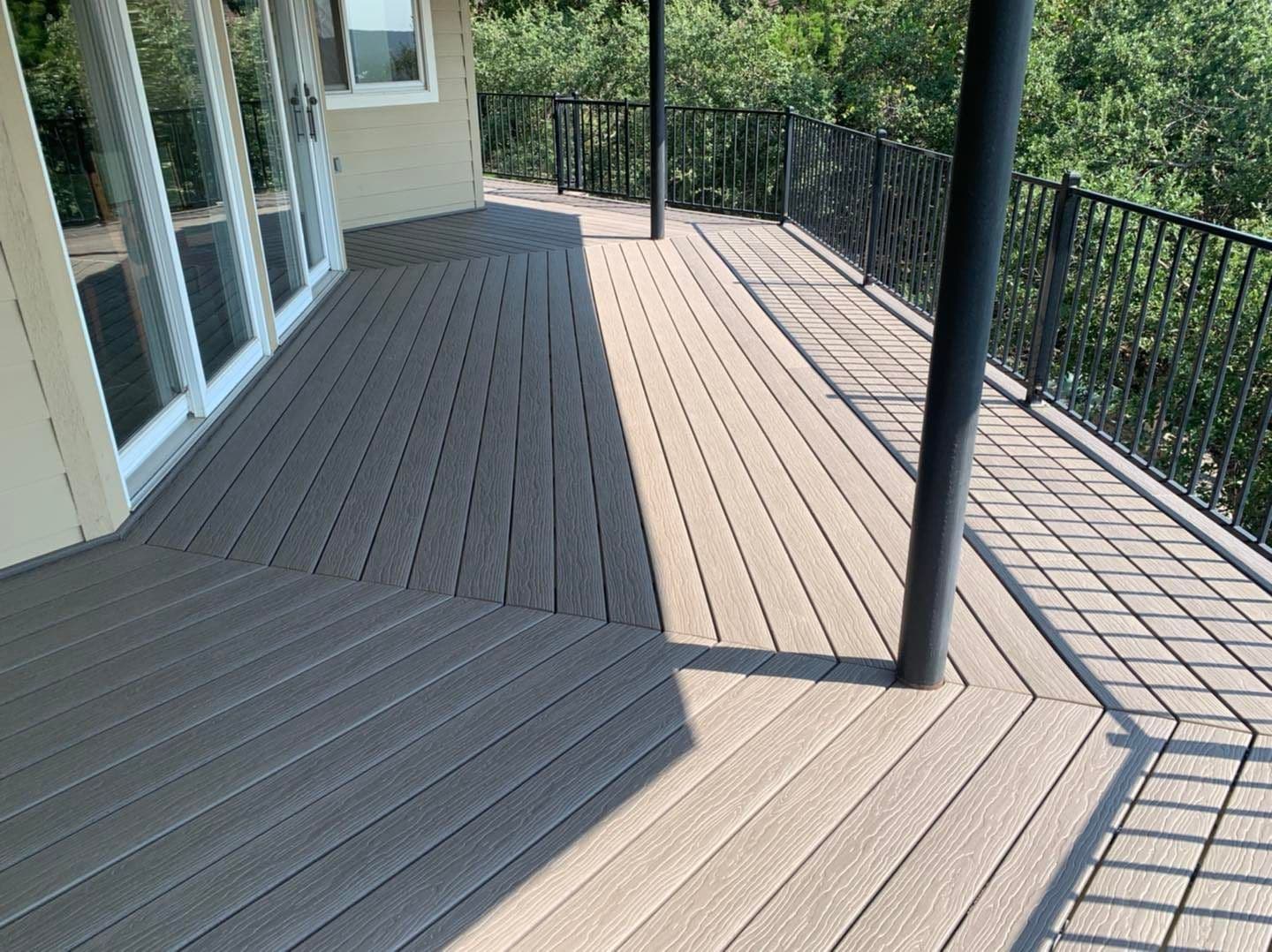
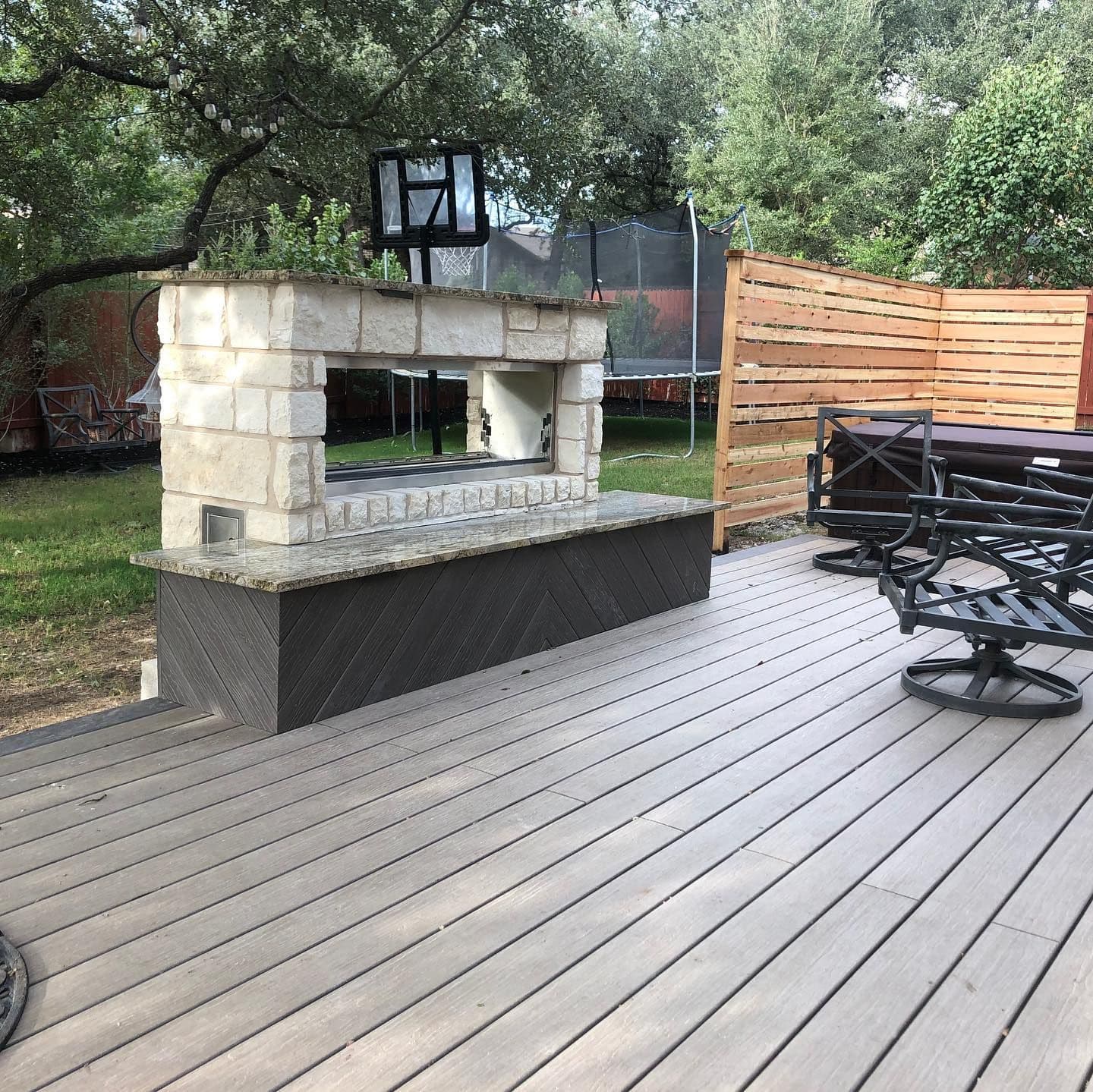
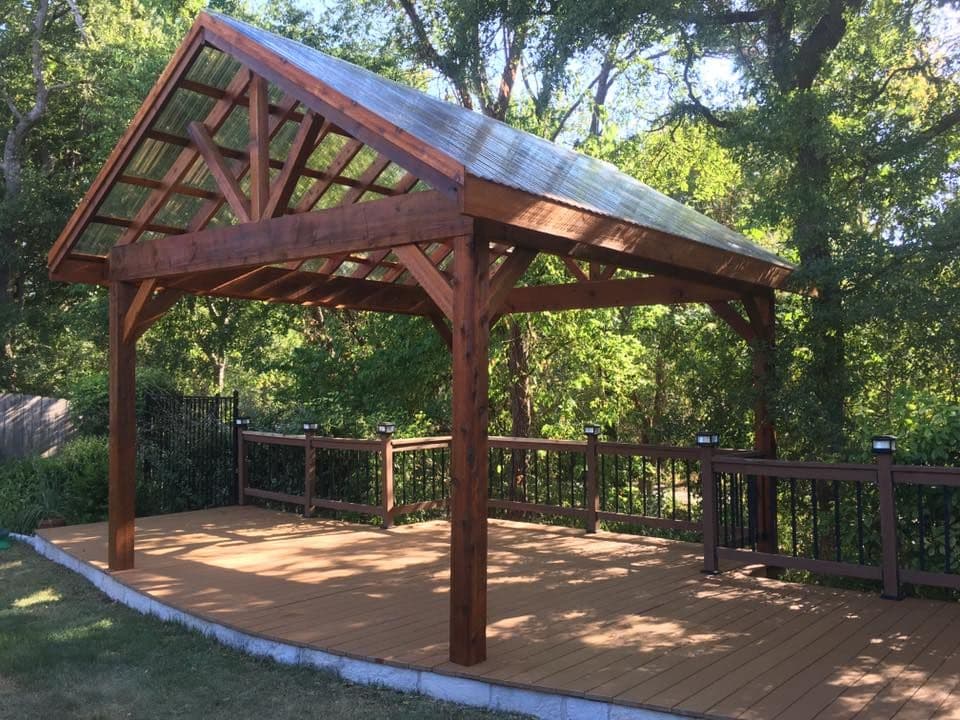
Attached or freestanding patio cover?
Attach the cover to the house when it shades a back door or windows and you want to walk outside without crossing open sun. Build it freestanding when it covers a spot out in the yard, like a pool edge or a separate seating area, or when the house wall cannot take a ledger.
An attached cover saves a row of posts and footings, but the connection to the house has to be engineered and flashed so water stays out of the wall. A freestanding cover needs posts and footings on every side and has to resist wind on its own, which matters when a spring storm pushes across an open yard.
Both need permits in most cities around Austin. Round Rock, for example, lists $200 for a covered patio permit and $300 when electrical or plumbing is added, and Cedar Park requires permits for patio covers.
Which roof type handles Texas heat best?
Insulated roof panels keep the space under them coolest. At $50 to $80 per square foot installed, they block the radiant heat that makes a thin roof feel like a griddle overhead, and they help most when the cover sits against windows and sliding doors.
Aluminum covers at $25 to $40 per square foot are the budget choice and need almost no upkeep. Uninsulated metal gets hot in direct sun, so they work best with a ceiling fan or on an east or north exposure.
Cedar beam construction at $45 to $70 per square foot gives the Hill Country look with exposed beams and a solid roof above. Standing seam metal at $55 to $85 per square foot lasts 40 years or more and shrugs off hail better than most roofing, which counts in Central Texas spring storms.
Tying the cover into your roofline
The tie-in method depends on how much height you have. If the cover can start above your gutter line, it can run as a gable or hip that joins the main roof and looks original to the house. If the eave is low, as on many single-story homes, the cover usually attaches to the wall below the eave as a shed roof with a lower slope.
Slope is where most problem covers go wrong. Too flat and water sits on it, and the cover eventually leaks and sags. The roof material dictates the minimum pitch, and we design the ledger height around it so you still have comfortable headroom under the low edge.
Matching materials finishes the job. Shingles, standing seam, or a complementary metal can make the cover read as part of the house instead of an add-on, which is also what most HOA review boards want to see.
Fans, lighting, and electrical
Plan the electrical before the ceiling goes up. A ceiling fan is the single biggest comfort upgrade under an Austin patio cover, and each fan needs a rated box mounted to framing. Wiring runs cleanly inside the structure during construction, and later it means surface conduit.
Most covers get at least one damp-rated fan, recessed or surface lights on a dimmer, and a couple of outdoor outlets. Add a dedicated circuit if a TV, heater, or future outdoor kitchen is on the list. Our 16x20 insulated cover with fans runs $32,000 to $45,000.
Patio cover or pergola?
Choose a patio cover when you want full shade and a dry place to sit through rain. Choose a pergola when you want filtered light, a lighter look, and a lower budget. An open pergola blocks roughly 25 to 50 percent of the sun, while a solid cover blocks all of it.
In Central Texas, the solid roof usually wins over a back door because it also cuts heat on the windows behind it. A pergola often makes more sense out in the yard or over a spot you use mostly in the evening.
Cost reflects the difference. Our 10x12 attached pergola runs $8,000 to $12,000, while a 12x20 aluminum patio cover runs $15,000 to $22,000 and a 14x24 cedar beam patio cover runs $28,000 to $38,000. The cover costs more because it carries roofing, gutters, drainage, and a flashed tie-in that a pergola does not, and it lasts longer too: 25 years or more for aluminum and 30 or more for cedar beam construction.