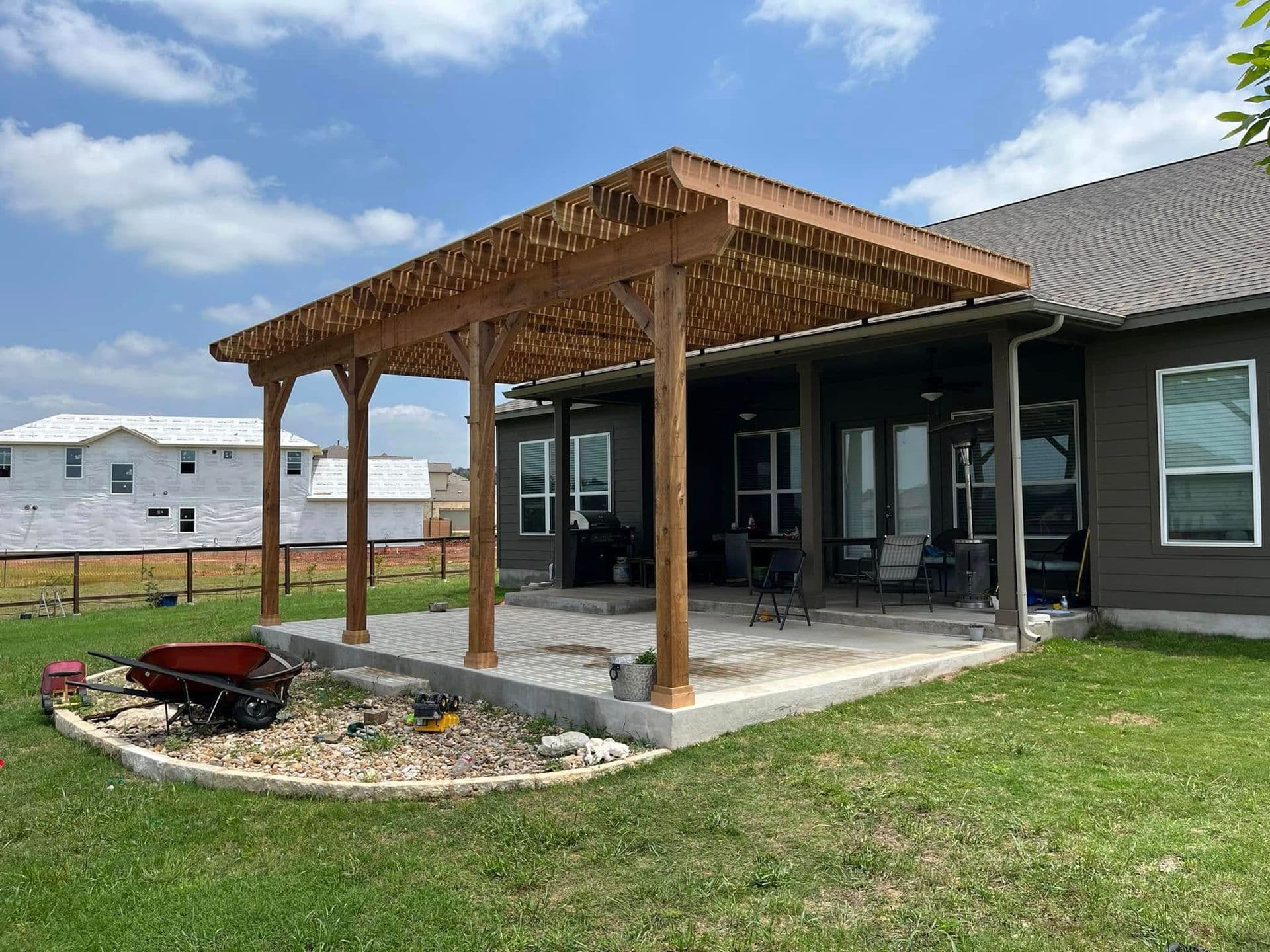
A pergola permit in Round Rock costs $125, or $300 if the pergola includes electrical or plumbing. Round Rock caps accessory structures at 15 feet tall and keeps them out of easements and 5 foot side and rear setbacks, so those three rules set the outline of the design before we pick wood or size.
Round Rock pergola permit costs and timeline
Permits go through the City of Round Rock portal at permits.roundrocktexas.gov and are reviewed under the 2024 International Residential Code. The pergola fee is $125. Add lights, a ceiling fan, or an outlet and it moves to $300. On a $14,000 cedar pergola, that is less than 1 percent of the project in either case.
Review time is the bigger planning factor. Round Rock lists about 30 business days, which is roughly six weeks. We submit as soon as you approve the design so the review runs while materials are ordered.
Setbacks, easements, and the 15 foot limit
Accessory structures in Round Rock cannot encroach into easements or into the 5 foot side and rear setbacks. Many subdivision lots have a utility easement along the back fence, so the usable pergola area can be smaller than the yard looks. We pull your plat and mark the buildable area first.
The 15 foot height cap rarely limits a flat-top pergola, which usually stands 9 to 11 feet. It matters for a raised deck, where the pergola height is measured from grade and the deck height counts against it.
We confirm every line on the plat before the drawings go in, because a correction after submittal adds time to a review that already runs about six weeks.
Clay on the east side, rock on the west
East Round Rock sits on Blackland clay that swells and shrinks with rain and drought. Pergola footings there go deeper to reach stable soil. West Round Rock has more limestone, which we drill. The soil also changes the cost of the footings, which is part of why our quote comes after a site visit and not over the phone.
Either way, posts sit on steel bases above the concrete so the wood stays dry.
Pine or cedar for a Round Rock pergola
Pressure-treated pine runs $30 to $45 per square foot and lasts 15 to 20 years. Western red cedar runs $45 to $65 per square foot and lasts 20 to 25 years. For a 10x12, that framing difference is 120 times $15 to $20, or about $1,800 to $2,400 more for cedar.
Cedar is the more common choice for a freestanding frame because it stays straighter as it dries and resists rot and insects on its own. Pine makes sense for an attached pergola that will be painted to match white trim. Either way, the stain or paint needs renewing every two to three years in Round Rock sun.
We Know Round Rock Backyards
Round Rock is Williamson County's largest city, and it straddles two kinds of ground: limestone on the west side and Blackland clay to the east. It also has some of the clearest published permit rules in the area, down to the fee for an uncovered deck. We build decks, covered patios, pergolas, gazebos and screened porches in Round Rock and handle the city permit and HOA approval.
Permits, HOAs, soil and local building tips for Round Rock
"Round Rock is easy to plan if you start with the city's rules. Five feet off the side and back property lines, nothing in an easement, and the review takes a while. So we lay the deck out against your survey on day one. Then we look at the dirt, because the west side and the east side are two different jobs."
- Peter Toomey, Founder
Why Pergolas Matter Here
Pergolas define outdoor rooms without enclosing them. They're perfect for creating an outdoor dining area, framing a view, or adding vertical interest to a flat yard. The open design allows climbing plants like wisteria or bougainvillea to create natural beauty.
Architectural Impact
A well-designed pergola elevates your entire landscape. It frames views, creates vertical interest, and adds sophistication that flat patios can't match.
Flexible Shade Options
Start with an open pergola and add shade later - retractable canopies or shade sails. Your needs may change; a pergola adapts.
Perfect for Plants
Climbing vines like wisteria, jasmine, or bougainvillea thrive on pergola structures. Create a natural, living shade canopy that blooms seasonally.
Defines Outdoor Rooms
A pergola creates a "ceiling" for your outdoor space without walls. It signals where the living area is, organizing your backyard naturally.