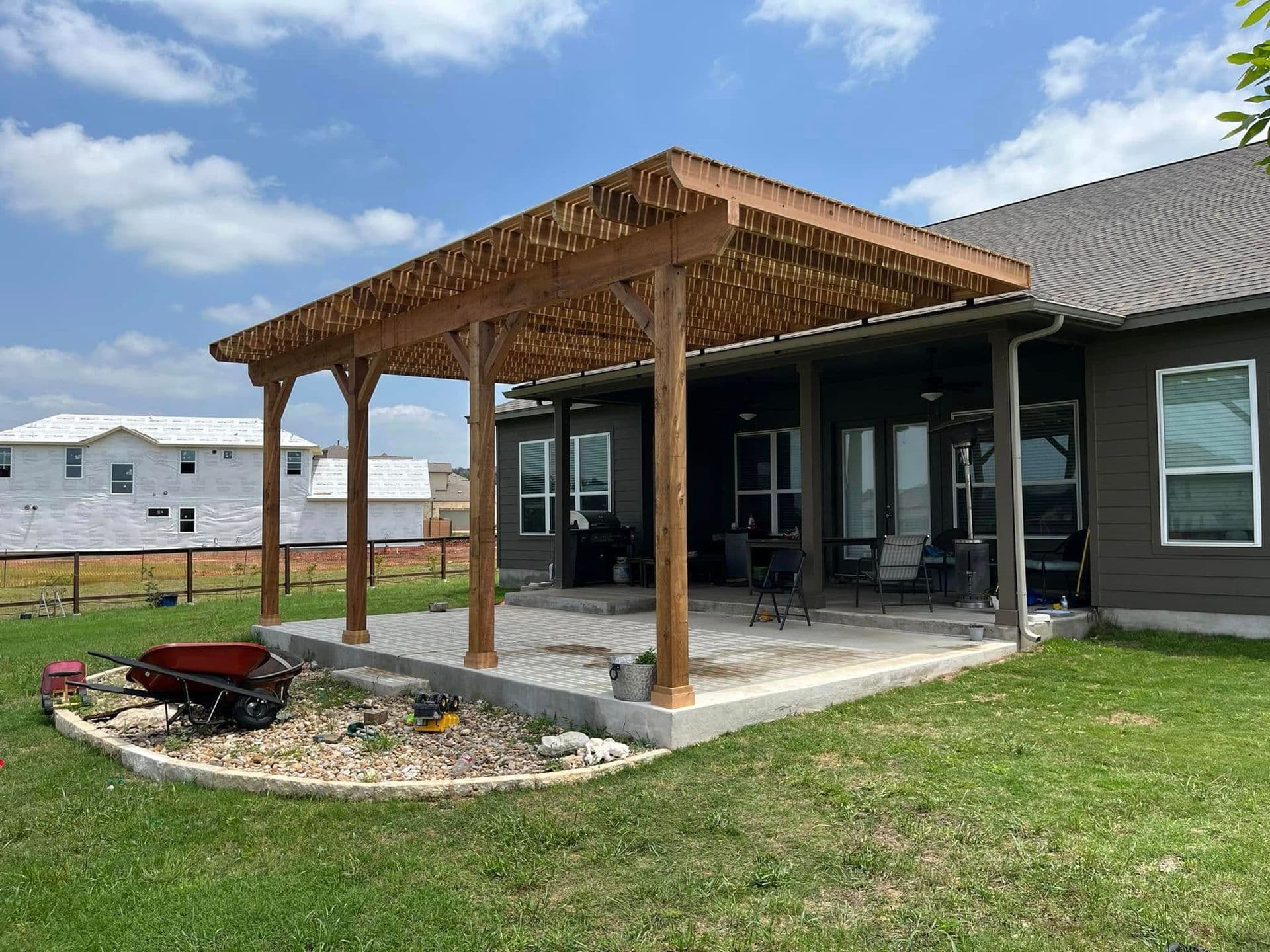
A custom pergola in Austin typically costs $8,000 to $35,000 installed, with a 12x14 freestanding cedar pergola at $14,000 to $22,000. The Austin specifics that shape the design are the City of Austin's protected tree ordinance, soil that changes from rock to clay across town, and older houses where an attached pergola has to tie into walls that were never built for one.
What a pergola costs in Austin
Framing runs $30 to $45 per square foot in pressure-treated pine and $45 to $65 per square foot in western red cedar. Complete projects include footings, hardware, finish, permits, and cleanup, so they land higher than the framing math. A basic attached 10x12 runs $8,000 to $12,000. A freestanding 12x14 in cedar runs $14,000 to $22,000. A 14x20 cedar pergola big enough for a dining table and a seating group runs $22,000 to $35,000.
Every quote is a fixed written price after a free visit to your yard. The number you sign is the number you pay.
Building a pergola near Austin's protected trees
Austin is the strictest city in the metro, and its tree ordinance is the rule that most often moves a pergola. A post footing dug into the root zone of a large protected tree can trigger design changes or extra review. We locate every post before the plans are drawn, and we would rather shift a post two feet or lengthen a beam span than cut a major root.
A mature oak can also be the best shade partner a pergola has. Set the open frame where the canopy already covers the late afternoon, and the rafters only need to handle the hours the tree misses.
Rock west of MoPac, clay in East Austin
West side lots often have limestone within a foot or two of the surface, so footings get drilled into rock. That rock gives a pergola post a very stiff base. East and southeast Austin sits on expansive black clay that swells when wet and shrinks in drought, which calls for deeper piers so the posts do not rise and fall with the seasons. Central neighborhoods can be either, sometimes on the same street, so we check each lot.
Attaching a pergola to an older Austin house
Many central Austin homes have pier and beam floors, lap siding, and low eaves. An attached pergola needs a solid ledger or bracket connection, flashing that keeps water out of the wall, and enough height that the rafters clear the gutter line. When the wall cannot take a ledger, we set a beam on its own posts a few inches off the house. It looks attached and keeps the load off old framing.
Painted pine suits a bungalow with painted trim. Cedar suits a modern house with natural wood accents. Both hold up under Austin sun if the stain or paint gets renewed every two to three years.
We Know Austin Backyards
Austin is two different building sites depending on where you live. West of MoPac, many lots sit on limestone under a few inches of soil. East of I-35, expansive clay runs deep. Add the strictest permit process in the area and a tree ordinance that protects large trees, and planning matters more here than anywhere else we work. We build decks, covered patios, pergolas, gazebos, screened porches and outdoor kitchens across Austin.
Permits, HOAs, soil and local building tips for Austin
"Austin soil changes more across town than people expect. West of MoPac you're often on rock with a little dirt on top. East of I-35 it's deep clay that moves. Same deck design, completely different footings. And in the central neighborhoods, the big oak in the backyard usually decides where the deck goes before we do."
- Peter Toomey, Founder
Why Pergolas Matter Here
Pergolas define outdoor rooms without enclosing them. They're perfect for creating an outdoor dining area, framing a view, or adding vertical interest to a flat yard. The open design allows climbing plants like wisteria or bougainvillea to create natural beauty.
Architectural Impact
A well-designed pergola elevates your entire landscape. It frames views, creates vertical interest, and adds sophistication that flat patios can't match.
Flexible Shade Options
Start with an open pergola and add shade later - retractable canopies or shade sails. Your needs may change; a pergola adapts.
Perfect for Plants
Climbing vines like wisteria, jasmine, or bougainvillea thrive on pergola structures. Create a natural, living shade canopy that blooms seasonally.
Defines Outdoor Rooms
A pergola creates a "ceiling" for your outdoor space without walls. It signals where the living area is, organizing your backyard naturally.