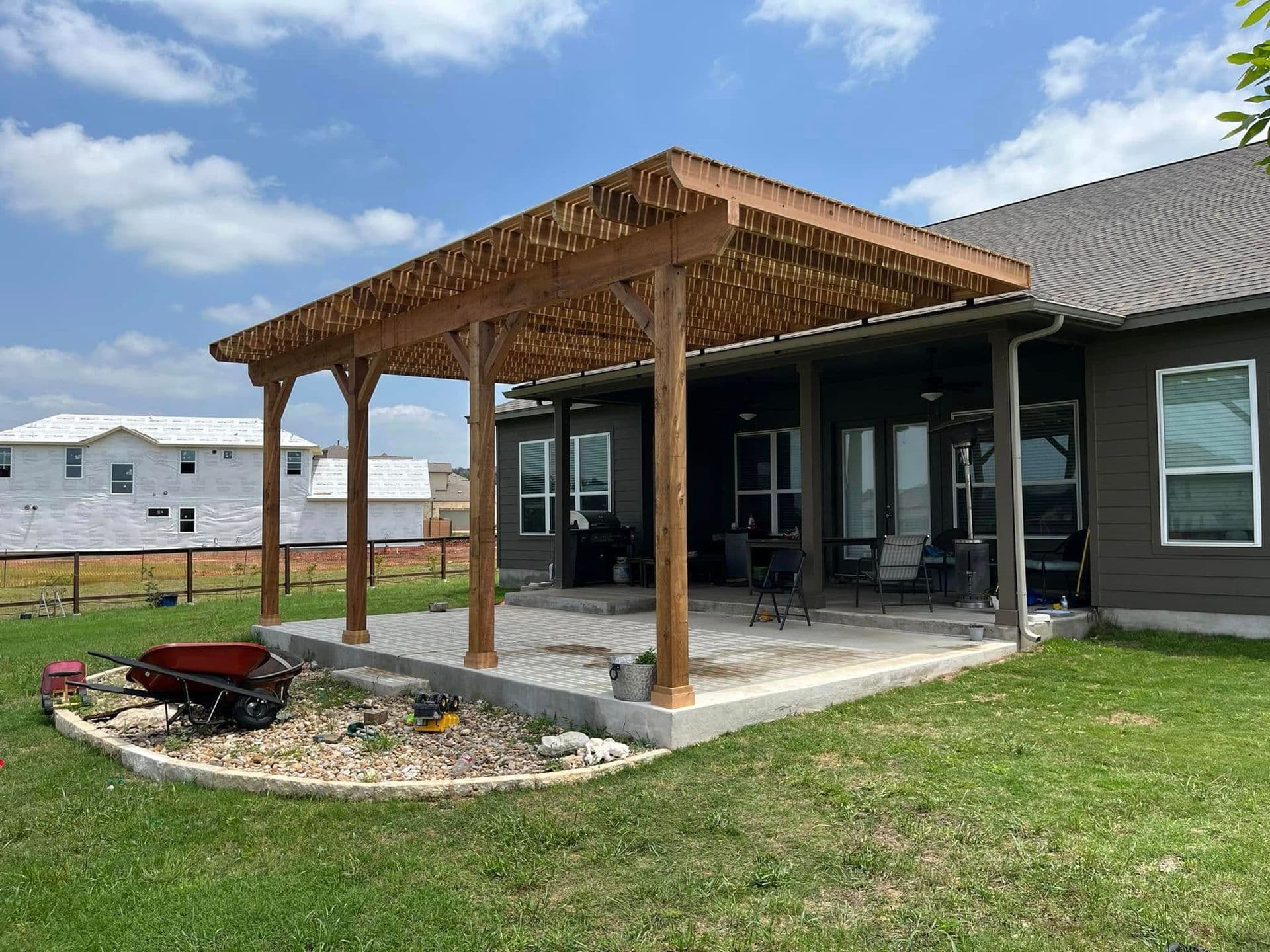
Taylor has more older homes and larger lots than the newer suburbs around it, and that changes the pergola. A painted pressure-treated pine pergola that matches the trim suits a traditional house, costs less than cedar, and runs $8,000 to $12,000 for an attached 10x12. Footings still have to account for the Blackland clay common around Taylor.
Pergolas for older Taylor homes
Many Taylor houses have lap siding, painted trim, and porches. A pergola in painted pine picks up those details. We match post size and rafter tails to the house so it looks like it was always there. Attaching to an older wall takes care: we check what is behind the siding before we fasten a ledger, and if the wall cannot carry it we set a beam on posts just off the house.
String lights or a ceiling fan need a circuit, and on an older house we check the electrical panel before promising either. Wiring is planned into the frame so it runs inside the beams instead of stapled along them.
Pine or cedar in Taylor
Pressure-treated pine runs $30 to $45 per square foot, lasts 15 to 20 years, and takes paint well. Western red cedar runs $45 to $65, lasts 20 to 25 years, and looks best stained or left to weather. For a 12x14 frame, pine is 168 times $30 to $45, or about $5,000 to $7,600, and cedar is about $7,600 to $10,900, before footings, finish, and permits. Painted pine needs repainting every two to three years in full sun, so plan for it.
Clay soil and drainage
Taylor sits in the Blackland Prairie, where clay swells after rain and shrinks in dry months. Some lots are firmer than others. We check your soil and set piers below the layer that moves. Low spots that hold water after storms are the wrong place for a post, so we look at drainage before we fix the layout.
Steel post bases keep the wood off the concrete and dry.
Room for a freestanding pergola
Bigger lots and rural properties around Taylor leave room for a freestanding pergola over a garden, a fire pit, or a gathering area. A 14x20 cedar pergola runs $22,000 to $35,000. Permits are issued by the City of Taylor for homes in city limits. For older neighborhoods and newer subdivisions alike, we also check for HOA or deed restrictions.
A pergola in an open Taylor yard also catches more wind than one tucked against the house. On freestanding frames we use steel post bases on the piers and brace the corners where the height or span needs it. We serve Taylor from our shop in Liberty Hill, and the same crew stays on your pergola from footings to final walkthrough.
We Know Taylor Backyards
Taylor is an old railroad and cotton town on Blackland Prairie clay, with early 1900s homes near downtown and new subdivisions spreading out as Samsung's plant draws people east. Older houses and new builds need different approaches to attaching a porch or deck. We build covered porches, decks, pergolas, gazebos and patio covers in Taylor.
Permits, HOAs, soil and local building tips for Taylor
"Taylor's got older homes downtown and new development on the edges. Different approach for each. An old pier-and-beam house needs a porch that fits the house, usually wood, traditional details. The newer builds, we usually go composite. And the clay out here is serious, so footings get extra attention no matter what."
- Peter Toomey, Founder
Why Pergolas Matter Here
Pergolas define outdoor rooms without enclosing them. They're perfect for creating an outdoor dining area, framing a view, or adding vertical interest to a flat yard. The open design allows climbing plants like wisteria or bougainvillea to create natural beauty.
Architectural Impact
A well-designed pergola elevates your entire landscape. It frames views, creates vertical interest, and adds sophistication that flat patios can't match.
Flexible Shade Options
Start with an open pergola and add shade later - retractable canopies or shade sails. Your needs may change; a pergola adapts.
Perfect for Plants
Climbing vines like wisteria, jasmine, or bougainvillea thrive on pergola structures. Create a natural, living shade canopy that blooms seasonally.
Defines Outdoor Rooms
A pergola creates a "ceiling" for your outdoor space without walls. It signals where the living area is, organizing your backyard naturally.