Covered Patio Builders in Austin, TX
For 40+ years, All Seasons has built custom covered patios for Austin homeowners. 5,000+ outdoor projects completed across Central Texas. Fixed pricing, full warranties, same crew start-to-finish.
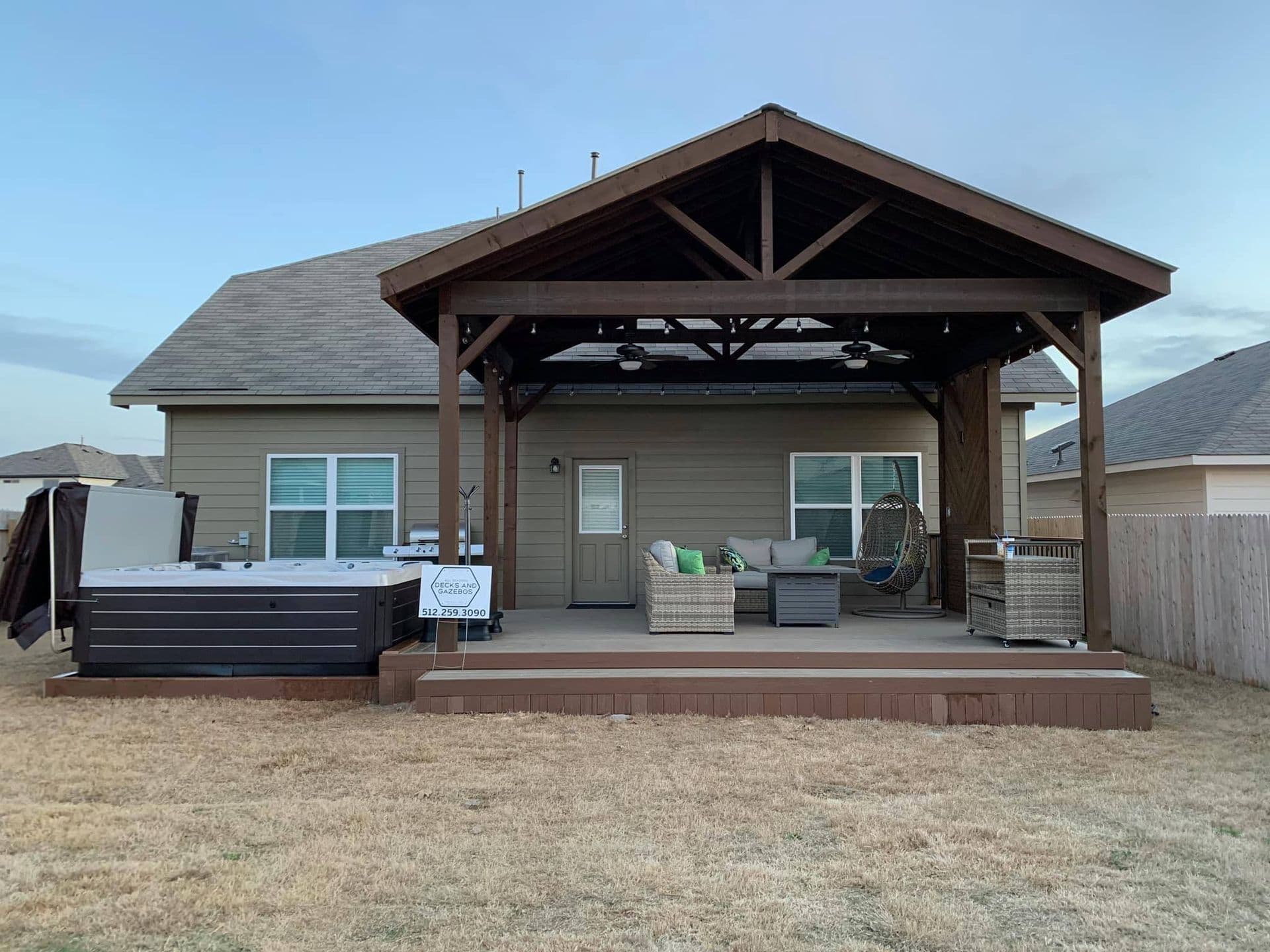
A covered patio in Austin is mostly a shade problem and a permit problem. The roof has to kill the late afternoon sun that bakes west-facing yards, and the posts have to land where the City of Austin and its tree ordinance will allow them. We design both at the same time, before you ever see a price.
Picking a roof for Austin's heat island
Central Austin holds heat after sundown, so the roof you choose matters more here than in the suburbs. A plain aluminum cover ($25 to $40 per square foot installed) throws shade but radiates warmth down on you by 5pm in August. An insulated panel roof ($50 to $80 per square foot) keeps the underside close to air temperature, which is why we steer most west-facing Austin patios toward it. Our 16x20 insulated cover with fans typically runs $32,000 to $45,000.
Cedar beams with a tongue-and-groove ceiling suit the older homes in Hyde Park, Travis Heights, and Allandale, where a metal panel can look bolted on. Cedar construction runs $45 to $70 per square foot installed.
Protected trees and post placement
Austin protects large trees, and a patio cover's footings can fall inside a tree's critical root zone. That is where most Austin patio designs change. We map the trunks and canopy on the first visit, then shift post locations, span a longer beam, or cantilever a corner so the digging stays out of the root zone. Moving a post on paper is free. Moving it after a review comment costs weeks.
Shade from a big live oak also changes the roof choice. A cover sitting mostly under canopy may not need insulated panels at all, and we will tell you that.
Tying into a 1950s roof vs a new build
Older central Austin houses often have low eaves and shallow roof pitches, which leaves little height to tie a new patio roof under the existing one. The fixes are a low-slope insulated panel, a raised header that ties in above the eave, or a freestanding cover set a few inches off the wall. Newer homes in Mueller and Circle C usually have taller plate heights and simpler tie-ins, but their neighborhood design standards often dictate roof color and material.
Soil changes across town too. East of MoPac, expansive clay moves footings unless they go below the active zone. West of MoPac, we are usually drilling into limestone.
Fans, lights, and wiring in an Austin cover
A patio cover without a ceiling fan is half finished in an Austin summer. Moving air under the roof does as much for comfort as the shade itself. We plan fan locations from the seating layout, not the center of the roof, and size them to the span.
Wiring goes through the permit and inspection along with the structure. Many insulated panel systems let the wire run inside the panel, so no conduit shows on the ceiling. With cedar, we run it above a tongue-and-groove ceiling. Either way the fixtures are rated for damp locations, and we add outlets where you will actually plug in a speaker or a string of lights. Deciding all of this before the roof goes on costs far less than adding it afterward.
We Know Austin Backyards
Austin is two different building sites depending on where you live. West of MoPac, many lots sit on limestone under a few inches of soil. East of I-35, expansive clay runs deep. Add the strictest permit process in the area and a tree ordinance that protects large trees, and planning matters more here than anywhere else we work. We build decks, covered patios, pergolas, gazebos, screened porches and outdoor kitchens across Austin.
Permits, HOAs, soil and local building tips for Austin
"Austin soil changes more across town than people expect. West of MoPac you're often on rock with a little dirt on top. East of I-35 it's deep clay that moves. Same deck design, completely different footings. And in the central neighborhoods, the big oak in the backyard usually decides where the deck goes before we do."
- Peter Toomey, Founder
Why Covered Patios Matter Here
In Texas, an uncovered south- or west-facing patio is unusable 6 months of the year. It's simply too hot. A properly designed patio cover can reduce temperatures underneath by 20-30 degrees and cut your home cooling costs by blocking direct sun on windows and doors. It transforms dead space into living space.
Reduce Cooling Costs
A patio cover blocking afternoon sun on windows and doors can noticeably reduce your AC load. We have had customers report 15-20% drops in summer electric bills.
Usable Year-Round
With proper design, your covered patio becomes a three-season room - or four seasons with added features. Rain, shine, or Texas heat, you'll use this space.
Outdoor Kitchen Ready
We coordinate gas lines, electrical, and plumbing during construction. Want a built-in grill, refrigerator, or pizza oven? We plan the infrastructure from day one.
Engineered for Your Home
Proper attachment requires structural engineering specific to your home. We handle the calculations, permits, and inspections - protecting your home and your investment.